How to Reduce Humidity at Home with Your Aircon
Struggling with sticky air indoors? Learn how to use your aircon's dry mode and other tips to reduce humidity in your Singapore home.
We understand the frustration of stepping into a sticky room and wondering how to reduce humidity at home with your aircon. The National Environment Agency reports that Singapore’s average humidity consistently hovers between 80% and 90%.
Your aircon actually acts as a powerful moisture removal tool instead of a standard cooler.
Our team of 26 technicians providing aircon servicing in Singapore at Billy Aircon has been solving these specific climate challenges since 2003. The data clearly shows that proper settings make a massive difference in your daily comfort and electricity bills. Let’s look at the science behind moisture removal and explore a few practical ways to respond.
We will outline the exact steps you need to take today. This knowledge helps you protect your furniture from mould. Proper adjustments also lower your monthly energy costs.
Use Dry Mode
Our daily service calls reveal that many homeowners completely ignore the water droplet icon on their remotes. Most modern brands like Mitsubishi and Daikin feature this dedicated dry mode. The system runs the compressor at a lower speed and circulates air very slowly.
We always explain that this slower pace allows damp air to spend more time against the cold evaporator coils. The machine prioritises moisture extraction over dropping the actual room temperature. This targeted approach prevents excessive cooling while keeping the environment comfortable.
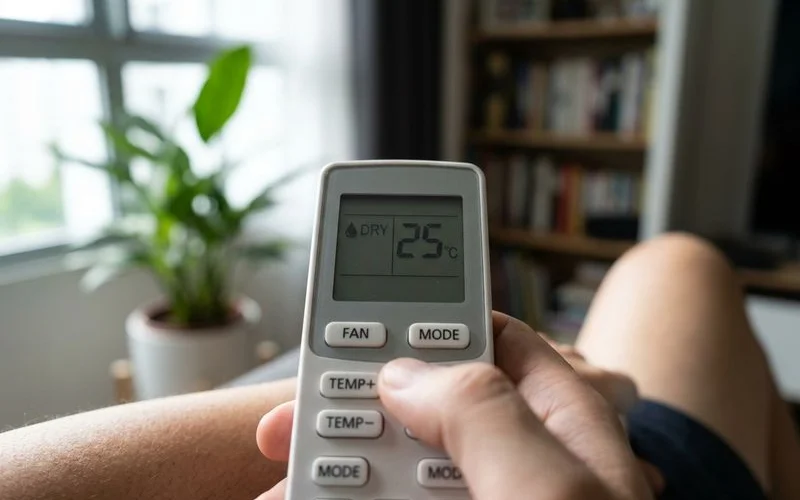
When to Use Dry Mode vs Cool Mode
We recommend using dry mode during the rainy season or on overcast days when outdoor temperatures sit around 26°C to 28°C. Cool mode becomes necessary on hot sunny days when the outside heat exceeds 30°C. A combined approach works best for general use.
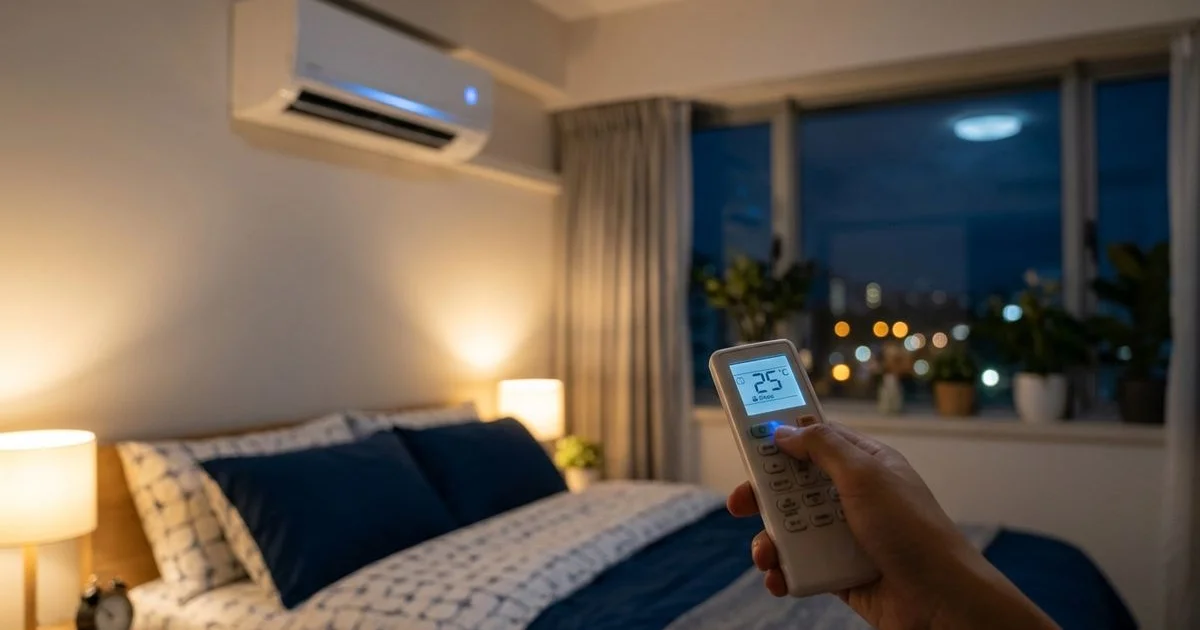
Our technicians suggest setting cool mode at a moderate 25°C so the system naturally dehumidifies while cooling. For more on optimal temperature settings, check our guide on the best aircon temperature for sleep. This specific strategy targets both heat and airborne water vapour effectively. The table below breaks down the exact differences to help you choose.
| Feature | Dry Mode | Cool Mode |
|---|---|---|
| Primary Goal | Removes moisture | Lowers room temperature |
| Ideal Weather | Rainy or overcast (26°C to 28°C) | Hot and sunny (30°C or higher) |
| Energy Usage | Lower | Higher |
| Fan Speed | Automatic and slow | Adjustable by user |
Set the Right Temperature
We often see clients setting their thermostats dangerously low in an attempt to combat a muggy feeling. Setting your aircon below 22°C can actually increase the sensation of dampness when you turn it off. Warm, humid air rushes back into the intensely cooled space, causing instant condensation on walls and floors.
Our advice aligns closely with the recent “Go 25” movement launched by the government in May 2025. This initiative encourages residents to set indoor temperatures at 25°C to reduce overcooling and lower energy use. Every degree below 24°C forces your compressor to work much harder, adding roughly 5% to 10% to your electricity bill.
We find that a moderate setting of 24°C to 25°C provides consistent dehumidification without unnecessary strain on the equipment. This sweet spot maintains a comfortable environment for your family. The balanced temperature also protects sensitive wooden furniture from swelling.
Keep Doors and Windows Closed
We constantly remind our commercial and residential clients about the importance of a sealed room. Every time you open a door or window while the aircon is running, humid outdoor air quickly enters the space. Your system then has to work twice as hard to remove that newly introduced moisture.
Our field tests show that unsealed gaps can let in 80% to 90% humidity straight from the Singapore outdoors. You must keep rooms tightly sealed when the unit operates to ensure maximum dehumidification. Sealing your bedroom doors provides a cheap and highly effective barrier against creeping dampness.
Regular Servicing Matters
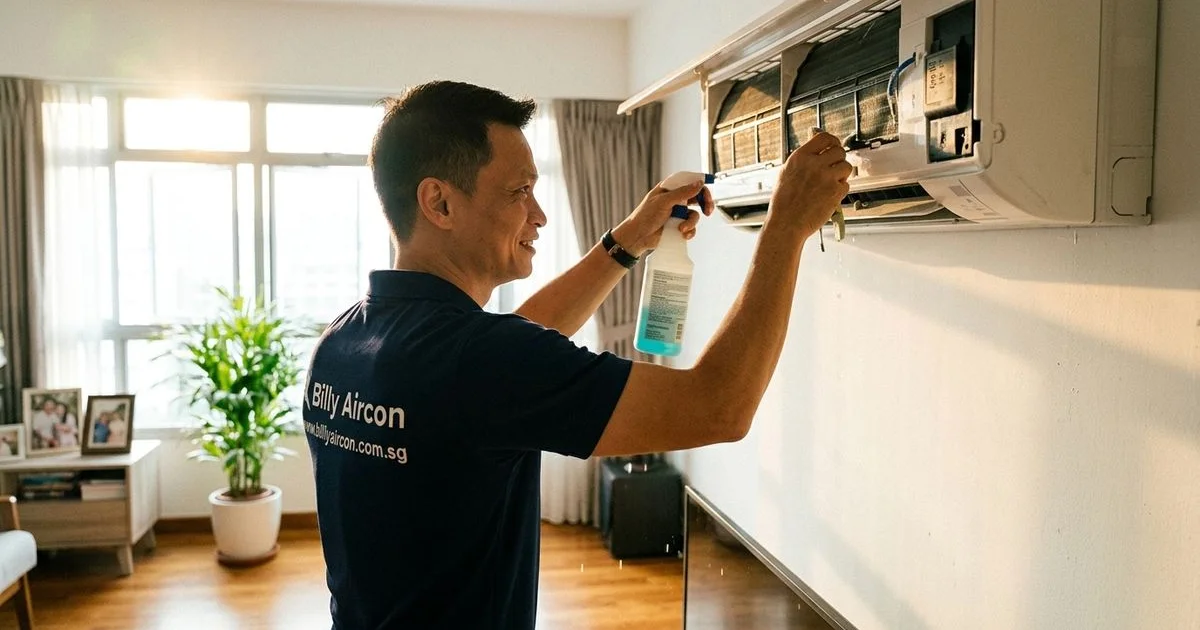
We cannot overstate how heavily a poorly maintained unit struggles to dry the air. Dirty evaporator coils significantly reduce moisture absorption inside the machine. Clogged drain pipes often cause the collected moisture to leak back into your room as dripping water.
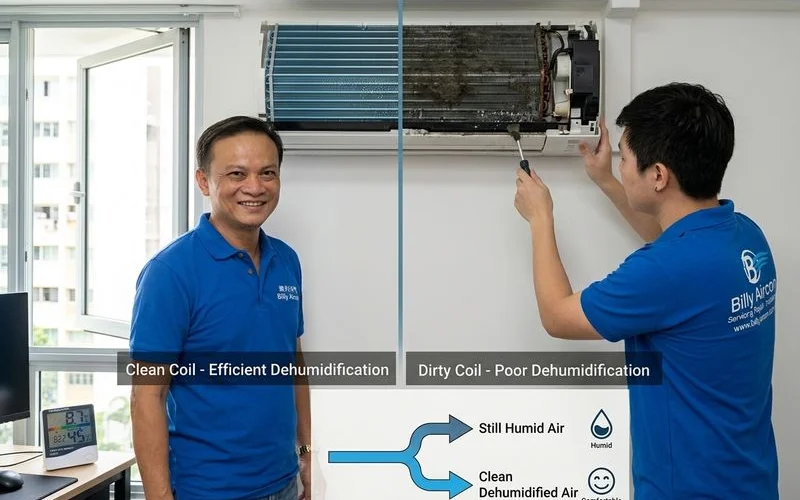
Our maintenance teams frequently uncover mould and mildew growing inside neglected indoor units. The Centers for Disease Control and Prevention notes that mould can sprout within 24 to 48 hours in damp environments. Regular aircon servicing every three to four months ensures your system operates at peak efficiency.
We highly recommend investigating further if your room still feels sticky after a basic cleaning. A thorough chemical wash may be required to dissolve stubborn grime deep within the evaporator coil. This deeper cleaning process restores the original moisture removal properties of the metal fins.
Other Tips on How to Reduce Humidity at Home with Your Aircon
We suggest pairing your cooling system with a few smart household habits for the best results. Small lifestyle adjustments greatly reduce the ambient water vapour in your HDB flat or condo. These simple actions prevent your compressor from running continuously throughout the day.
- Our technicians advise running exhaust fans when cooking or showering to extract steam immediately.
- Avoid hanging wet laundry indoors, as the evaporating water significantly increases room dampness.
- Check around your aircon drainage and household plumbing for hidden leaks that contribute to air moisture.
- We highly recommend a standalone dehumidifier for windowless storerooms or extremely damp corners of your home.
The power consumption data reveals a distinct cost difference between these machines. A standard air conditioner draws between 1,000 to 5,000 watts per hour during operation. Our readings show a dedicated dehumidifier uses only 300 to 700 watts, making it a cheaper alternative for pure moisture removal.
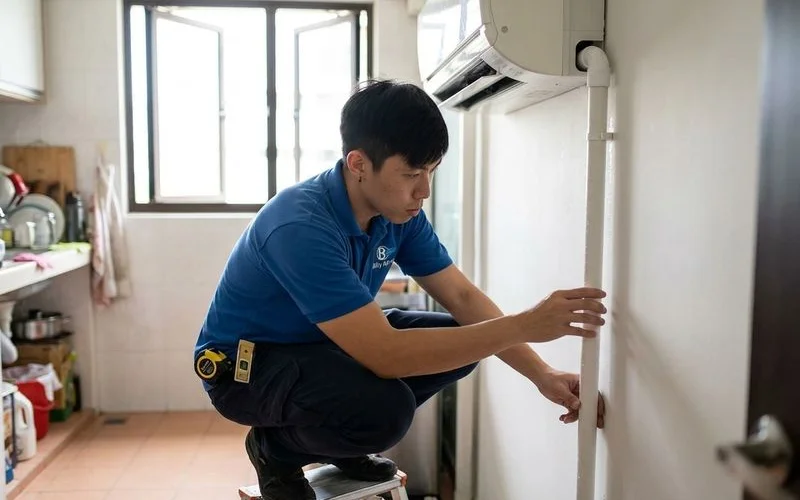
You might face an underlying mechanical issue if the air remains sticky despite your best efforts. Persistent dampness often points to failing sensors or a slow refrigerant leak. We hope this guide on how to reduce humidity at home with your aircon helps you reclaim your indoor comfort.
Simply WhatsApp us for a professional assessment of your current setup. A qualified technician will verify your system’s performance and implement the exact fix needed.

Written by
PhilipsChief Technical Leader
Founder of Billy Aircon with 25 years of aircon servicing experience in Singapore.
Need Professional Aircon Help?
Our team of 26 experienced technicians is ready to help. 90-day warranty on all services.
WhatsApp for Instant Quote