10 Signs Your Aircon Needs Repair
Spot these 10 warning signs early to avoid costly aircon breakdowns. Learn when to call a professional technician in Singapore.
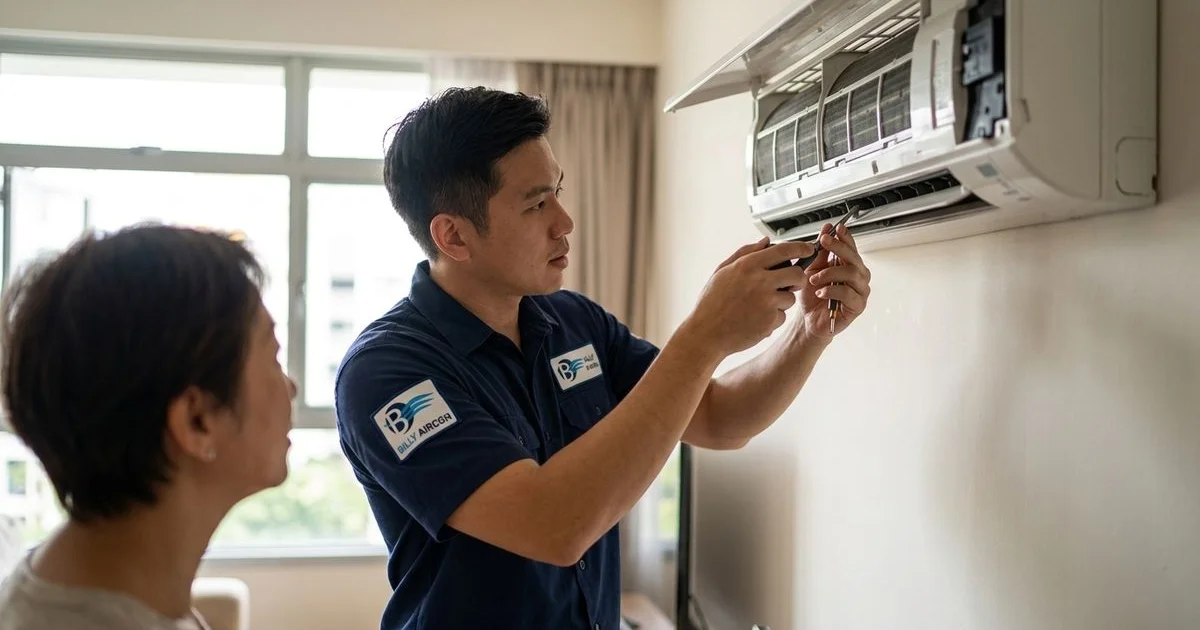
Many property owners ignore minor cooling issues until their entire system shuts down during a heatwave. Our experience shows that recognising the 10 signs your aircon needs repair makes the difference between a simple tune-up and an expensive compressor replacement. You will find that regular observation of your unit’s performance prevents unexpected breakdowns.
We started Billy Aircon back in 2003 with a small team of five, and over the years, our crew of 26 aircon servicing Singapore specialists has seen every possible air conditioning failure. The most common problems always leave behind clear clues before they escalate. Let’s look at the data, what it is actually telling us, and explore a few practical ways to respond.
I will break down the ten most common indicators of system failure and walk through the exact steps you should take next.
1. Warm Air Coming from the Unit
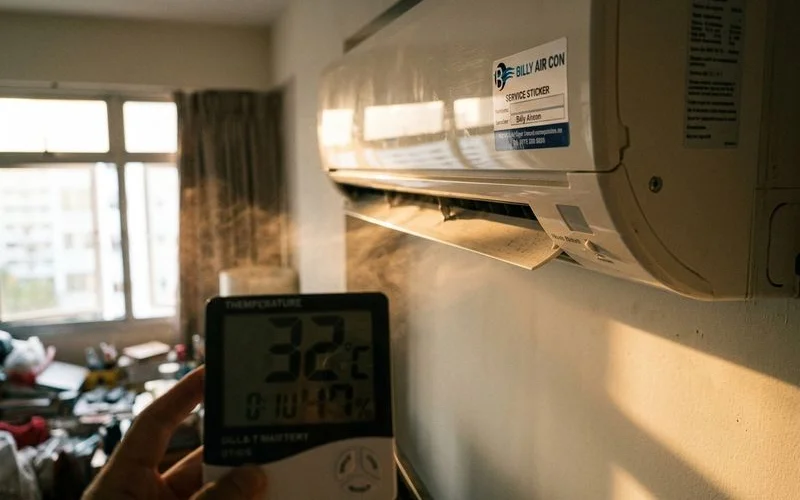
You expect a refreshing blast of cold air, but instead, you get a stuffy, lukewarm breeze. This usually means the heat removal process has completely stopped.
Our technicians frequently trace this problem back to a faulty run capacitor or a severe refrigerant gas leak. A run capacitor acts like a battery to jump-start the compressor. If this small electrical part fails, the outdoor condenser unit cannot release heat. In other cases, your system might be running low on R32 or R410A refrigerant gas.
- Refrigerant leaks: Hissing sounds often accompany low gas pressure.
- Dirty air filters: Thick dust blocks the airflow, suffocating the cooling cycle.
- Compressor failure: The outdoor unit stops pumping refrigerant entirely.
- Blocked condenser: Debris prevents the outdoor unit from expelling heat.
We always check for physical damage and electrical faults first. You should avoid setting the temperature lower to force the issue. This puts unnecessary strain on the motor. Contact us for same-day diagnosis to resolve most cooling issues in a single visit.
2. Water Dripping from the Unit
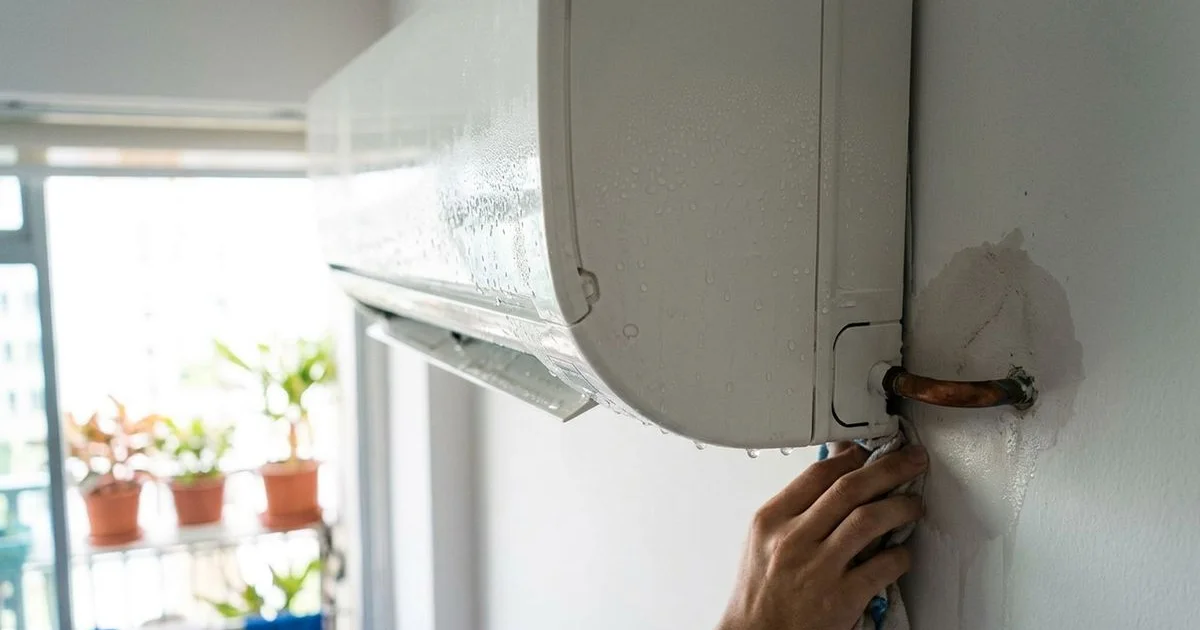
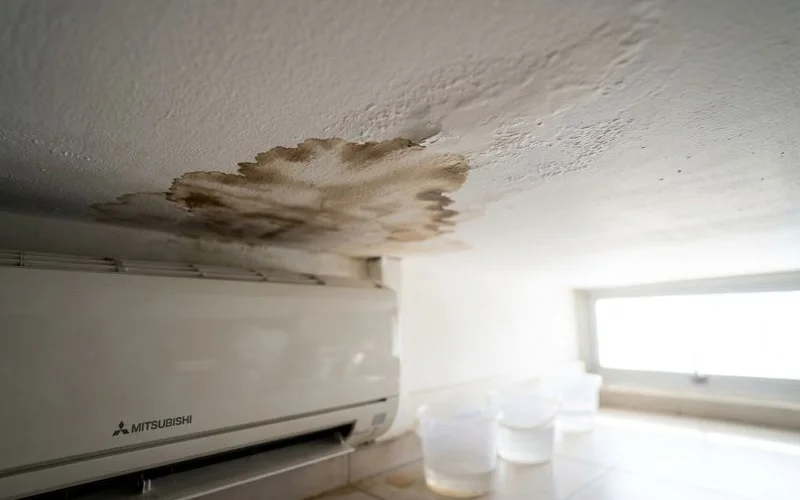
High humidity levels in Singapore cause air conditioners to generate a massive amount of condensation. This water normally flows through a drainage pipe into your bathroom or exterior drain.
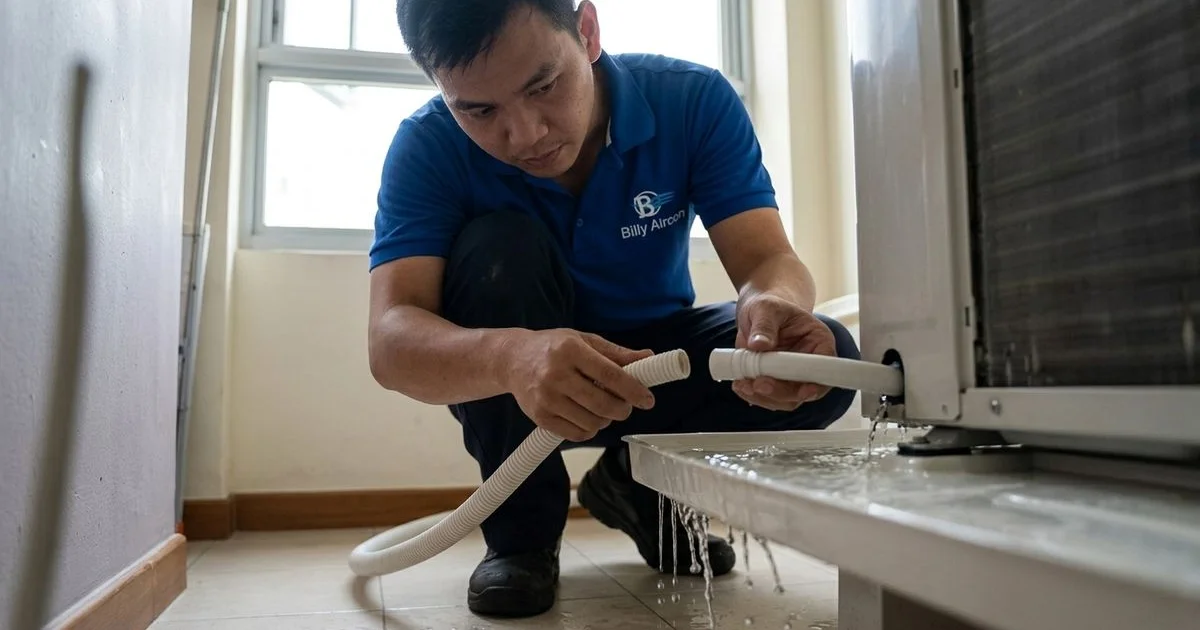
Our maintenance records show that 80% of water leaks stem from a clogged condensate line. Dust and moisture mix inside the dark piping to form a thick, jelly-like algae substance. This blockage causes the drip pan to overflow directly into your room. Another common cause is poor insulation around the copper pipes, which creates excess condensation along the trunking.
| Leak Location | Likely Cause | Required Action |
|---|---|---|
| Front of indoor unit | Clogged condensate drain pipe | Vacuum and clear the blockage |
| Along the wall trunking | Degraded pipe insulation | Replace torn or thin insulation |
| Under the outdoor unit | Normal operation or blocked drain pan | Inspect the outdoor pan |
We recommend upgrading to a thicker 16mm drainage pipe instead of the standard 13mm size if clogs happen frequently. Upgrading provides better water flow and reduces the chance of algae blockages. Get your water leak fixed before it causes permanent damage to your walls, flooring, and furniture.
3. Unusual Noises
Your cooling system should operate with a quiet, consistent hum. Any sudden mechanical noise is a massive red flag.
Our team categorises these sounds to quickly identify the failing component. A high-pitched squealing usually points to a worn fan motor bearing that needs immediate lubrication or replacement. If you hear a loud rattling sound, the internal fan blower wheel might be unbalanced due to heavy dirt accumulation.
Grinding and Banging Noises
A harsh grinding noise from the outdoor compressor is a critical emergency. Metal-on-metal grinding indicates internal damage, such as broken pistons. You must shut the power off immediately to prevent total motor destruction.
- Rattling: Loose front panels or unbalanced fan blades.
- Squealing: Worn fan motor bearings lacking lubrication.
- Grinding: Compressor internal failure or severe bearing damage.
- Buzzing: Electrical issues like a failing contactor or loose wiring.
We often fix minor rattling simply by tightening the mounting brackets. The Housing & Development Board (HDB) has strict regulations regarding outdoor bracket safety, so ensuring these are secure prevents dangerous accidents.
4. Bad Smell When Running
A foul odour blowing from the vents ruins the comfort of your home. This problem, often called “dirty sock syndrome,” happens when microbes multiply inside the damp indoor unit.
Our cleaning specialists frequently find Pseudomonas bacteria and mould spores thriving on the wet evaporator coils. The unit sucks in human skin flakes, pet dander, and dust, providing a food source for these microbes.
- Musty smells: Mould and mildew growing on wet coils.
- Rotten egg smells: A dead lizard or insect trapped in the duct.
- Chemical smells: A dangerous refrigerant gas leak requiring immediate attention.
If your room smells like harsh chemicals, you must shut the windows and turn off the device right away. A professional chemical wash eliminates 99.9% of bacteria and completely removes biological smells.
5. Weak Airflow
When the airflow feels weak even on the highest fan setting, something is physically blocking the air from moving. This forces the equipment to run longer, drastically increasing your monthly electricity costs.
We see clogged air filters as the number one culprit for poor air circulation. Singapore’s dusty urban environment can clog a standard mesh filter in just two to three weeks. If the filters are clean, the barrel-shaped blower wheel inside the unit is likely coated in heavy grime.
The Impact of a Dirty Blower
A dirty blower wheel becomes heavy and unbalanced. This prevents the motor from spinning at its optimal speed.
- Check the filters: Wash them under lukewarm water every 14 to 21 days.
- Inspect the fan speed: Ensure the remote is not accidentally set to “Quiet” or “Low” mode.
- Look at the blower: Shine a flashlight inside the vent to check for thick dust on the blades.
We know that ignoring weak airflow eventually leads to frozen coils and water leaks. Regular servicing keeps the airpath clear and ensures your room cools down in minutes instead of hours.
6. Ice on the Pipes or Unit
Finding a solid block of ice on the copper pipes or the indoor evaporator coil is alarming. This freezing happens when the system cannot absorb enough heat from the room.
Our diagnostic checks usually trace freezing back to a severe lack of refrigerant gas. When the pressure drops too low, the temperature of the cooling coil plunges below freezing, turning normal air moisture into solid ice. Running your air conditioner at 16 degrees Celsius continuously with dirty filters will also trigger this freezing effect.
“Never try to chip the ice away with a sharp tool. You risk puncturing the delicate copper coils and releasing dangerous refrigerant gas into your home.”
We advise turning the power off completely to let the ice melt naturally. You likely need a professional leak detection test and a proper gas top-up to permanently resolve the low pressure.
7. Frequent Cycling On and Off
If your system turns on, blows cold air for five minutes, and shuts down again, it is experiencing short-cycling. This rapid stopping and starting puts immense wear and tear on the compressor.
Our technicians often find that a faulty thermistor causes this erratic behaviour. The thermistor is a small temperature sensor that tells the main control board when the room is cold enough. If this sensor shifts out of position or fails, it sends incorrect signals to the Printed Circuit Board (PCB), forcing the unit to shut down prematurely.
| Short-Cycling Cause | System Symptom | Recommended Solution |
|---|---|---|
| Faulty thermistor | Unit turns off while the room is still warm | Replace the temperature sensor |
| Oversized unit | Cools too fast but leaves the room humid | Adjust fan speed or replace unit |
| Dirty condenser | Outdoor compressor overheats and trips | Deep clean the outdoor unit |
We also notice short-cycling when the outdoor condenser unit is heavily blocked by dust or debris. The compressor overheats quickly and triggers a safety shut-off switch to prevent a fire.
8. Higher Electricity Bills
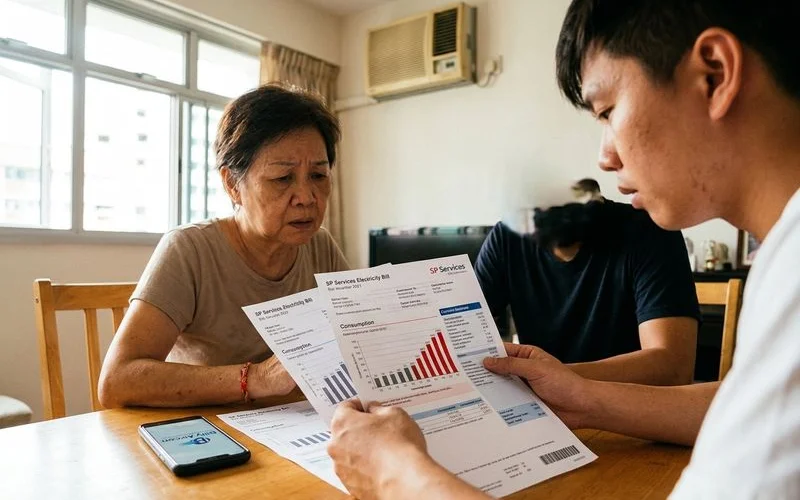
A sudden spike in your SP Group electricity bill is a silent warning sign. If your usage habits have not changed, an inefficient cooling system is wasting expensive power.
Our energy audits show that a system struggling with dirty coils or low gas uses up to 30% more electricity to reach the target temperature. At the current SP Group tariff rates of around $0.25 per kWh, this wasted energy adds up to hundreds of dollars annually. When the compressor works overtime, it draws maximum amperage for much longer than a healthy system.
“A well-maintained air conditioner cools your room in 15 minutes, while a dirty unit can run for hours without reaching the set temperature.”
You can easily prevent this financial drain. Regular professional servicing keeps the mechanical parts moving freely and the electrical draw at a minimum.
9. Error Codes or Blinking Lights
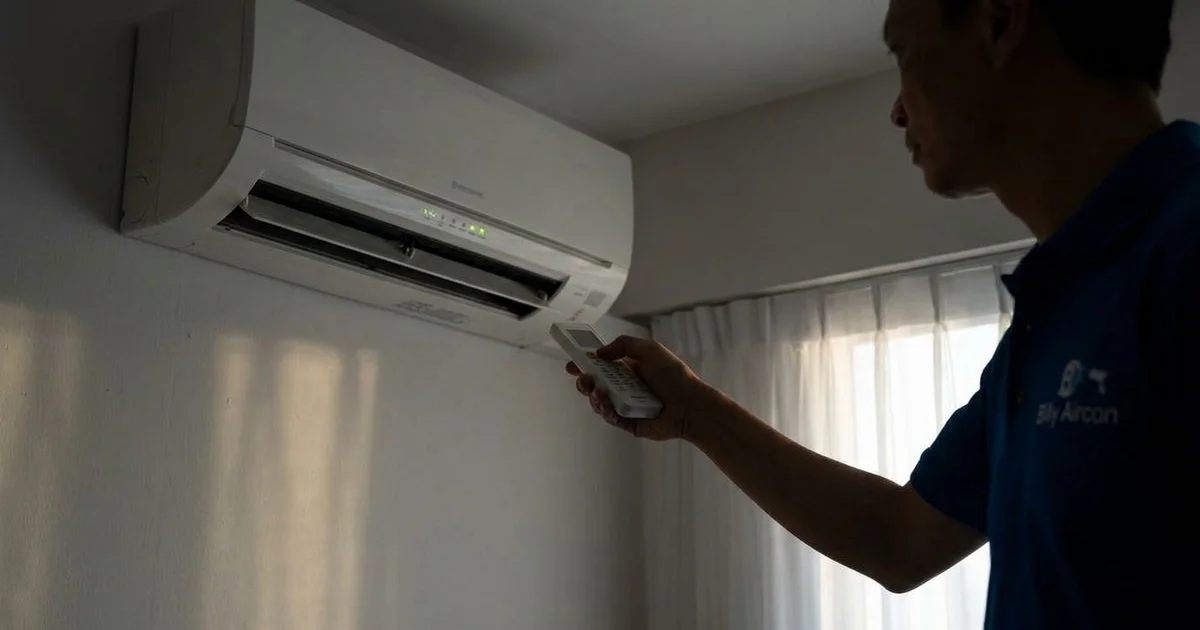
Modern inverter systems use built-in diagnostics to warn you about internal component failures. Instead of guessing the problem, you will see a blinking timer light or a specific error code on the display panel.
Our repair team uses these codes to pinpoint exactly which circuit has failed before opening the casing. For example, a continuous blinking light on a Mitsubishi system often signals a communication error between the indoor and outdoor units. A Daikin unit might display a “U4” code, indicating a damaged PCB or faulty wiring.
- Count the blinks: Note how many times the LED flashes in a row.
- Check the manual: Look up the exact model number for the corresponding fault.
- Do not reset blindly: Resetting the breaker temporarily clears the code, but the underlying issue remains.
We suggest taking a short video of the blinking light pattern to show your technician. Each brand has a completely different programming language, so check our detailed guide on AC light blinking for brand-specific meanings.
10. The Unit Is Over 10 Years Old
When reviewing the 10 signs your aircon needs repair, the sheer age of your equipment plays a massive role. Air conditioning systems endure intense daily usage in Singapore’s tropical climate. Even with perfect maintenance, the mechanical parts simply wear out over time.
Our historical data shows that most residential inverter units reach the end of their reliable lifespan between 8 and 12 years. By the time a system hits the 10-year mark, the compressor valves become weak, and the plastic casings grow brittle. You will likely face recurring repair bills for several common faults.
- Frequent refrigerant gas leaks from corroded copper pipes.
- Fan motor bearing failures causing loud grinding noises.
- Blown Printed Circuit Boards (PCB) from repeated electrical stress.
Replacing an old one-tick unit with a modern National Environment Agency (NEA) 5-Tick model yields incredible savings. The enhanced energy efficiency can save a household over $270 a year in electricity costs. If your decade-old system requires a major compressor repair, it is much smarter to invest in a new installation for long-term peace of mind.
Do Not Wait for a Complete Breakdown
Ignoring these 10 signs your aircon needs repair guarantees a hot, uncomfortable wait for emergency technicians. Catching a blocked drain or a strange noise early keeps the repair bill incredibly low.
We guarantee our work with a 90-day workmanship warranty. You can view our complete pricing guide for transparent costs across all services.
If you spot any of these red flags, WhatsApp us at +65 9456 0875 for a professional assessment. Your early action prevents the misery of a complete breakdown in the sweltering Singapore heat.

Written by
PhilipsChief Technical Leader
Founder of Billy Aircon with 25 years of aircon servicing experience in Singapore.
Need Professional Aircon Help?
Our team of 26 experienced technicians is ready to help. 90-day warranty on all services.
WhatsApp for Instant Quote